

News

Period
article

06 June 2023

By: B. Kurek, A. Day

11 April 2023 - FARE creates an Associated Partnership Laboratory with the company FRD

INRAE, the University of Reims Champagne-Ardenne and the Technological Resource Center Fibres Recherche Développement are intensifying their collaboration by creating an Associated Partnership Laboratory.
article

06 June 2023

By: INRAE Press Office

30 March 2023 - FARE joins an international laboratory with SCION dedicated to bio-based materials

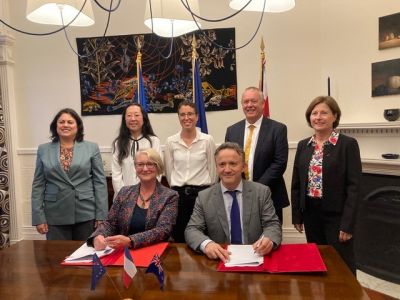
The creation of the new international associated laboratory (IAL) BIOMATA (Biorefinery for sustainable Materials and Technical Application), dedicated to biobased products with the Scion Institute of New Zealand, was made official during the visit of an INRAE delegation to Wellington, New Zealand on 30 March 2023.
article

06 June 2023

By: G. Paës

27 February 2023 - Method for automated morphological quantification of plant cells

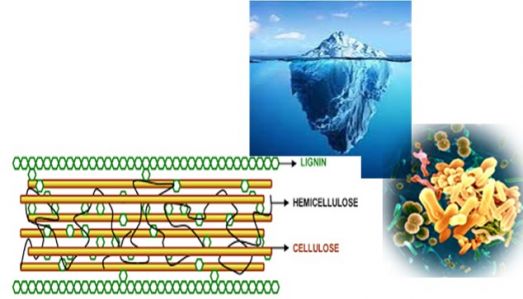
Lignocellulosic biomass is a complex network of polysaccharides and lignin that requires a pretreatment step to overcome recalcitrance and optimize valorisation into biobased products. Pretreatment of biomass induces chemical and morphological changes. Quantification of these changes is critical to understand biomass recalcitrance and to predict lignocellulose reactivity.
article

06 June 2023

By: H. Clivot / G. Paës

22 February 2023 - Visit of the Research Institute Director at Universidad Técnica de Manabí

UMR FARE welcomed Alex Alberto Dueñas Rivadeneira, Director of the Research Institute of the Universidad Técnica de Manabí in Ecuador, who was on a mission in France to develop international collaborations.
article

06 June 2023

By: J. du Pasquier / G. Paës

11 January 2023 - Literature review on dilute acid pre-treatment of biomass

Pretreatment of biomass is necessary to increase its reactivity. Among the existing pretreatments, dilute acid pretreatment is widely used because of its efficiency. But studies on this pretreatment use very small ranges of conditions and non-standardised methods making common interpretations difficult: it was important to take stock of the published work.
article

06 June 2023

By: I. Fall; S.Abdellaoui

3 janvier 2023 - Identification and characterization of a new catalase-peroxidase from bacteria

New study from Chaire AFERE and FARE lab allows the identification and characterization of a new catalase-peroxidase exhibiting a ligninolytic potential
article

06 June 2023

By: G. Paës

13 September 2022 - FARE participates to the 3rd International Plant Spectroscopy Conference

The 3rd International Plant Spectroscopy Conference (IPSC2022) was held in Nantes, France, from 12th to 15th of September. This event is part of the biennial conference series, organized jointly with the International Society for Plant Spectroscopy (ISPS) and the French National Research Institute for Agriculture, Food and Environment (INRAE).
article

06 June 2023

By: G. Paës

07 July 2022 - Special issue edited in Frontiers in Plants dedicated to biomass recalcitrance

Plant cell walls are complex structures fulfilling a variety of functions throughout a plant's life. They maintain the plant's structural integrity by resisting hydrostatic pressure, and at the same time, provide flexibility to support cell growth and division and a pathological and environmental barrier that defends against stress. Cell walls are therefore recalcitrant towards deconstruction by chemicals, enzymes, and/or microbes, which is a major obstacle for many approaches to processing plant material. An enhanced understanding of the complex interplay of the different cell wall compounds and their contributions to the recalcitrance will lead to more sophisticated strategies to utilize plant biomass in its conversion into materials, chemicals, and fuels.
article

06 June 2023

By: M. Cassarini; S. Abdellaoui

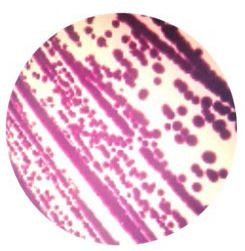
17 june 2022 - Optimization of violacein production on protein-rich substrates

A new study from the AFERE chaire / UMR FARE allowed to show a key factor in the overproduction of the microbial pigment violacein by species Chromibacterium vaccinii.
article

06 June 2023

By: G. Paës

09 May 2022 - Inside hydrolysis pattern of pretreated maize cells in real-time

A multimodal approach has been devised to relate variations in chemical composition to accessibility of maize cell wall (enzyme fluorescence) in order to provide keys to understand the different patterns of cell wall degradation according to cell type and pretreatment.
article

06 June 2023

By: S. Recous / G. Paës

11 April 2022 - Launch of the PEPR programme FairCarboN

The exploratory Priority Research Equipment Programme (PEPR) FairCarboN - Carbon in Continental Ecosystems: Levers and Pathways to Carbon Neutrality will increase the contribution of continental ecosystems to climate change mitigation and carbon neutrality.
article

06 June 2023

By: G. Paës

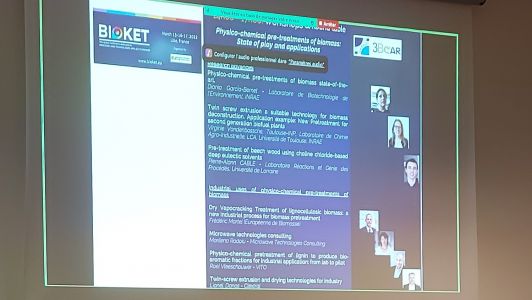
17 March 2022 - FARE co-organises a workshop on pre-treatment of plant biomass at BIOKET

This workshop, organised by Carnot 3BCAR and INRAE with contributions of academic and industrial stakeholders aimed at presenting the state of the art of the physico-chemical pre-treatments for overcoming recalcitrance of lignocellulosic biomass.
article

06 June 2023

By: L. Besaury / S. Abdellaoui

21 february 2022 - The phyllosphere of agricultural co-products

The phyllosphere of agricultural co-products as a new ecological niche for microorganisms of interest for lignocellulosic biomass fractionation
article

06 June 2023

By: S. Recous / G/ Lashermes / G. Paës

08 February 2022 - Recruitment of an INRAE permanent scientist at FARE lab

INRAE is recruiting at FARE lab in Reims a permanent scientist on plant litter recycling in agroecosystems and its impacts on biogeochemical cycles.
article

06 June 2023

By: Ludovic Besaury

28 january 2022 - FARE's EC2CO NOVACULTMIC project funded

The EC2CO NOVACULTMIC (New approaches to cultivate the Microbial Dark Matter) project, led by Ludovic Besaury, a research professor at the AFERE chair at FARE, has been selected for funding. This project will start in January 2022 for a duration of 24 months.
article

06 June 2023

By: G. Lashermes / S. Recous

January 10 2022 - The physiological maturity of the plants from which the crop residues originate impacts N2O emissions during their soil decomposition

The knowledge of nitrous oxide (N2O) emissions associated with agricultural practices should advance to improve the greenhouse gas (GHG) balance of agriculture. This study examined gaseous emissions during the soil decomposition of crop residues. The results raised a sensitive issue around residues that are still "green" from physiologically immature plants because they are linked to high emitting situations.
article

06 June 2023

By: C. Rémond

24 november 2021 - Oligosaccharides produced from wheat bran are beneficial for our gut flora

Wheat bran, an abundant agricultural co-product rich in xylans, is a resource of interest for the production of xylo-oligosaccharides (XOs)
article

06 June 2023

By: C. Ivaldi

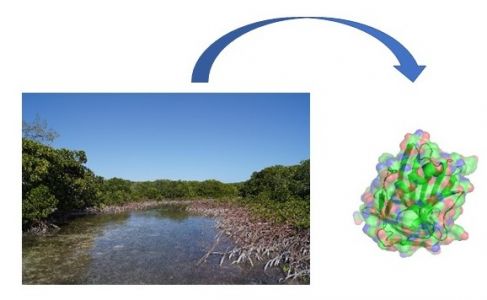
17th november 2021 - Discovery of a new xylanase in the mangrove of New Caledonia

A new xylanase, among many others, was discovered and expressed in order to be characterized.
article

06 June 2023

By: F. Berzin / G. Paës

20 October 2021 - Development of a biobased nanocomposite for electrical insulation

This study contributes to the improvement of the electrical properties of nanocomposites based on oil- and bio-based polymers reinforced with lamellar clay
article

06 June 2023

By: M. cassarini, S. Abdellaoui

02 september 2021 - Using agro-industrial wastes for the bioproduction of natural pigments

A recent study from the researchers of the AFERE chair (UMR FARE) contributes to the global research of the bioconversion of agro-industrial wastes or coproducts, with the use of microbial fermentation to produce pigments.
article

06 June 2023

By: S. Abdellaoui

01 september 2021 - The ANR JCJC 2021 VALBIOELEC project coordinated by FARE has been accepted

The ANR JCJC VALBIOELEC project led by Sofiene Abdellaoui, an assistant professor of FARE, has been selected for funding. This project will start in January 2022 for a duration of 42 months.
  • 3 (current)